What If a Simple Moment with a Dog Could Change Someone’s Day?
- 2 August 2026
- Jerri Pirc
Have you ever noticed how your body relaxes when you pet a calm, friendly dog? Your shoulders drop, your breathing slows, and for a moment, everything feels a little easier.
That response isn’t accidental. It’s also the heart of therapy dog work.
A therapy dog is a specially trained dog whose role is to provide calm, comfort, affection, and emotional support to people in a wide variety of settings—hospitals, schools, libraries, airports, and during times of crisis. Therapy dogs don’t perform medical tasks like service dogs do. Instead, they offer something equally powerful: steady presence, connection, and a sense of safety in moments that can feel stressful or overwhelming.
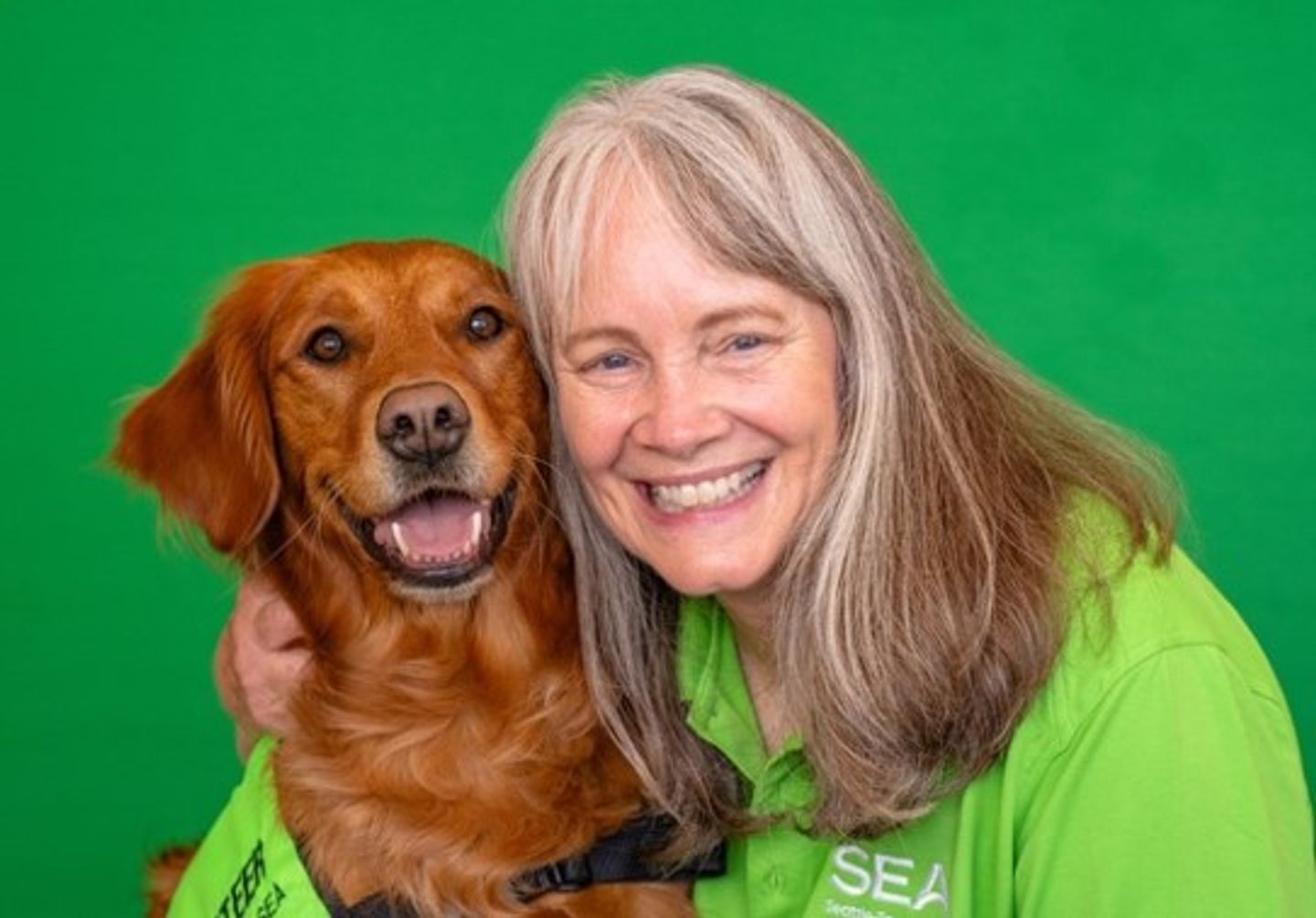
Keena, my golden retriever, does this work naturally and beautifully.
From the very beginning, Keena had a gentle, loving personality. She’s calm but curious, affectionate without being overwhelming, and deeply attuned to the people around her. She seems to sense when someone needs comfort, when someone wants to talk, and when someone simply needs quiet companionship. These traits—along with her steady temperament and genuine joy in connecting with people—are what make her such a wonderful therapy dog.
Why Therapy Dogs Help Us Feel Better
There is strong evidence that interacting with therapy dogs has real physiological benefits. Petting a calm dog has been shown to increase levels of oxytocin, often called the “bonding hormone,” and dopamine, which is associated with pleasure and emotional well-being. At the same time, stress hormones like cortisol decrease. The result is a measurable calming effect: lowered heart rate, reduced anxiety, and an increased sense of emotional safety.
What feels like a simple interaction—a few quiet minutes with a dog—is actually helping the nervous system settle. Keena offers that calming presence everywhere she goes.
How Our Therapy Dog Journey Began
My interest in therapy dogs began years ago, long before Keena was born. I work in an outpatient physical therapy setting with children, and I often thought about how powerful a therapy dog could be as a motivator—especially for kids who were anxious, hesitant, or struggling to engage.
Later, my hospital acquired a facility dog whose role was to sit with children during difficult medical procedures, including chemotherapy. Watching that dog offer calm companionship during such intense moments was deeply moving. I was inspired not only by the comfort the dog provided, but by the trust and connection that developed so naturally.
That experience planted a seed.
When I finally decided to pursue therapy dog work myself, I approached it intentionally. I looked for a reputable breeder and participated in temperament testing with a litter of puppies before selecting Keena. Even as a young pup, she stood out. She was calm, curious, and people-focused—traits that are essential for therapy work. A therapy dog has to genuinely love interacting with people. Without that joy, the work simply wouldn’t be effective.
Training for the Real World
I worked with a skilled trainer who had experience training service dogs, which gave Keena an excellent foundation. Together, we focused on teaching Keena how to move through the world calmly and confidently, even in busy or unpredictable environments.
We spent time in places like Home Depot and other stores filled with noise, movement, carts, and people of all ages and appearances. These outings helped Keena learn to stay relaxed amid chaos and to remain focused on her handler and the people around her. Step by step, she gained the skills and confidence needed for therapy work in real-world settings.
It has been quite a journey—and an incredibly rewarding one.
Supporting Children Through Trauma and Learning
One of the most meaningful parts of Keena’s work now takes place in a school setting with children who have experienced trauma in their home environments. In this program, Keena and I work together to help children feel safer, more confident, and more in control.
I teach the children how to train a dog and guide them as they work directly with Keena. Through this process, they learn how to give clear cues, set boundaries, and observe how Keena responds. We also play games designed to encourage engagement, cooperation, and joy—activities that help restore a sense of agency for children whose lives may have felt unpredictable.
Some children are very withdrawn at first. Over time, working with Keena often helps them come out of their shell. They begin to speak more, smile more, and engage more confidently—not just with Keena, but with the people around them.
An important part of this work is teaching children how to safely interact with a dog they do not know. They learn how to read a dog’s body language, recognize signs of comfort or stress, and adjust their own behavior accordingly. These lessons build empathy, awareness, and respect—skills that extend far beyond working with dogs.
Becoming a Crisis Response Dog
After about a year and a half as a therapy dog, Keena took the next step in her journey and became a certified crisis response dog. Crisis response work differs from traditional therapy dog visits. Rather than scheduled programs, crisis response teams are called into communities during times of acute stress—after traumatic events, natural disasters, or other situations where people are overwhelmed.
In these moments, Keena’s role isn’t to entertain or distract. It’s to be present.
Keena is especially well suited to this work because of her calm, grounding nature. She can sit quietly beside someone who is grieving, lean gently into a hand that needs comfort, or remain close when words feel inadequate. Her steady presence often helps people regulate their emotions and feel less alone.
A Moment That Stays With Me
At the airport, Keena and I meet many travelers who miss their pets, are dealing with delays, or simply need a moment to decompress. But every once in a while, an interaction stands out in a deeper way.
Recently, we met a retired New York City police officer who shared stories of his lifelong love of dogs and the poodle he had recently lost. He also spoke about his years of service—including being present on 9/11, where he lost five friends. Since then, he has faced many battles with cancer, yet his spirit was warm, kind, and open.
As he talked, Keena quietly curled up beside him, offering her steady, silent comfort. For a few moments, she was exactly what he needed before continuing on his journey. It was an honor to meet a true hero—and a reminder of how powerful simple presence can be.
The Quiet Magic of Keena’s Work
Keena has volunteered in many environments—schools, libraries, hospitals, airports, and crisis response settings. Each one is different, but her role is always the same: to offer calm, comfort, and connection without expectation.
Again and again, people tell us that spending just a few minutes with Keena made their day a little better. And that is the quiet magic of therapy dog work—showing up, meeting people where they are, and reminding us of the healing power of connection.